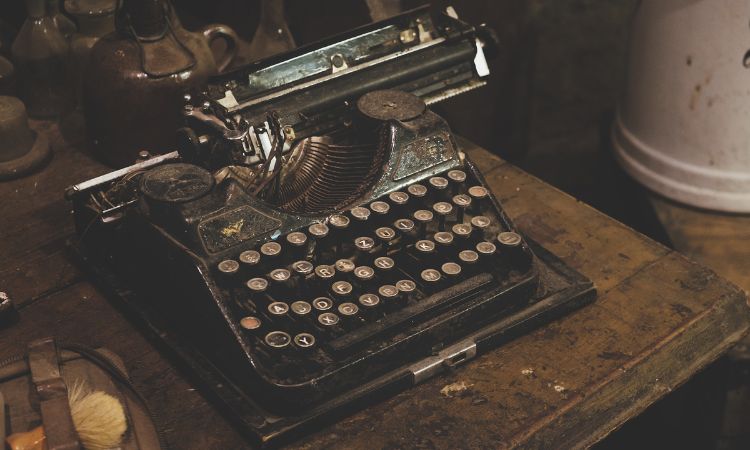
The Click, Clack and Return of the Typewriter
WORLD
For generations, the sound of a typewriter was part of everyday office life. The rhythmic click-clack of the keys, followed by the unmistakable sound of the carriage moving across the page, once accompanied millions of workers as they prepared letters, reports and official documents.
Today, that sound has almost disappeared from offices. Computers, laptops and digital word processors have transformed the way people write and store information. Yet the traditional typewriter has not completely vanished.
Instead, it has found a second life among collectors, writers, artists and people fascinated by the experience of putting words on paper one letter at a time
From office essential to vintage curiosity
The typewriter emerged as one of the major writing technologies of the late 19th century. Early machines were far from the sleek devices people might imagine today, but improvements in their construction gradually made them practical for everyday use.
By the 20th century, typewriters had become standard equipment in businesses, government departments and other workplaces. They provided a faster and more uniform way of producing documents and became an important part of administrative work.
Their dominance eventually came to an end with the arrival of electric typewriters, personal computers and increasingly sophisticated word-processing software.
For people who began their careers before the digital revolution, however, the transition remains a vivid memory.
Retired government employee Rita Jopet remembers a time when a typewriter was as common on an office desk as a computer is today.
“Almost every desk had a manual typewriter,” she recalls.
According to Jopet, typewriters have not disappeared completely. Their role, however, has changed dramatically.
They are now more likely to be found in the hands of collectors and enthusiasts than in conventional offices. Some writers are also attracted to the distinctive rhythm and physical sensation of typing directly onto paper.
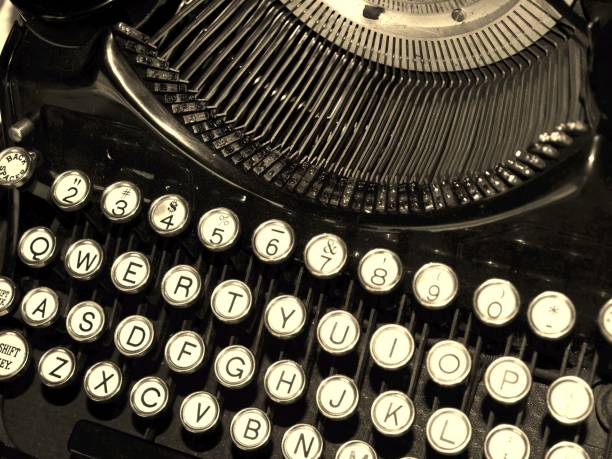
A machine unfamiliar to younger generations
For many younger people, the typewriter is no longer something they encounter in daily life.
Some have only seen the machines in photographs, films or museums.
Secondary school student Dina Ofran says she has never actually used one.
“I have seen pictures but never a real one,” she said, adding that trying one would be an interesting experience.
The difference between generations illustrates just how quickly writing technology has changed. A machine that was once considered revolutionary can now seem almost mysterious to people who grew up with smartphones and computers.
A manual typewriter relies on a straightforward mechanical system. Pressing a key causes a corresponding metal character to strike an inked ribbon, leaving an impression on a sheet of paper.
There is no screen, delete button or automatic correction. Once a letter is placed on the page, changing it requires considerably more effort than editing a document on a computer.
For some users, that limitation is precisely the attraction.
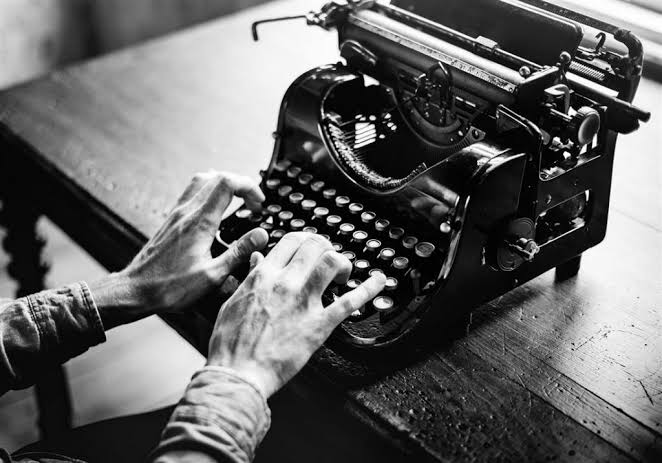
Why writers are bringing them back
Novelist and retired university professor Jaime Calub says the physical process of typing gives him a different relationship with his work.
With a typewriter, every keystroke produces an immediate result. The writer cannot simply move between dozens of browser tabs or become distracted by notifications.
The limitations can therefore encourage a slower and more deliberate writing process.
For Calub, the experience is not simply about nostalgia. It creates a direct connection between the writer, the machine and the finished page.
Retired public school teacher Chito Ras sees another dimension to the appeal.
For him, typewriters have a distinctive visual character and evoke memories of a less digitally connected era. Their mechanical nature also means they can operate without an internet connection, something he considers useful when writing private material.
The inability to endlessly revise a document can also become a creative exercise. Instead of constantly correcting and rearranging sentences, the writer has to think more carefully before pressing the key.
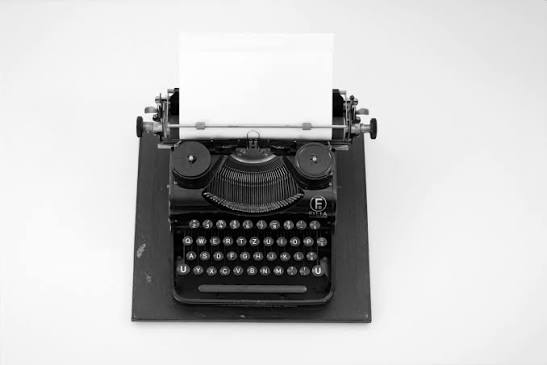
Where typewriters still survive
Finding a working manual typewriter is considerably more difficult than it once was, but they can still be found in unexpected places.
Jopet says some enthusiasts continue to keep them in their homes or private studios. One of her acquaintances, a literary fiction writer, still uses an old machine because she enjoys the slower and more intentional rhythm it provides.
Typewriters can also survive in certain legal, administrative or archival environments where physical documents may still be required or valued.
Their presence is particularly noticeable among collectors and people interested in historical technology.
From office equipment to art
The typewriter’s second life extends beyond writing.
Artists and designers sometimes use old machines as decorative objects or incorporate them directly into creative projects. Their distinctive appearance has also made them popular among vintage collectors.
Antique stores, museums and historic houses can occasionally reveal machines that have remained untouched for decades.
For some families, an old typewriter sitting in a study or library is more than an obsolete piece of equipment. It is a physical reminder of how previous generations communicated and worked.
A machine that refuses to disappear
The manual typewriter is unlikely to return to the modern office in the role it once occupied. Digital technology has made writing, editing, copying and storing documents considerably more convenient.
But disappearance is not quite the same as extinction.
The typewriter has survived by becoming something different: a collectible, a creative tool, a piece of design and, for some writers, a way of escaping the distractions of the digital world.
Its appeal lies partly in its imperfections. There is no autocorrect, no notification and no endless stream of digital interruptions — only the keys, the ribbon, the paper and the words.
For those who continue to use them, the old machines offer something modern technology cannot quite reproduce: the feeling of slowing down and making every keystroke count.