Thailand’s Traditional Floral Garlands Find a New Life on Social Media
VIRAL
A traditional Thai flower arrangement is getting a fresh makeover in 2026. Phuang Malai, the delicate floral garlands long associated with temples, ceremonies and expressions of respect, are now appearing in a very different setting: on people’s hair and in contemporary fashion looks.
For generations, Phuang Malai have carried meanings that go far beyond decoration. Families have traditionally chosen flowers and carefully woven them together as a gesture of affection and gratitude. Depending on the occasion, the garlands can represent sentiments such as love, good fortune, prosperity, peace and stability.
Their role eventually expanded into religious and cultural life. Garlands are commonly offered at temples and are also associated with important celebrations, including weddings, Mother’s Day and traditional performances.
From ceremonies to social media
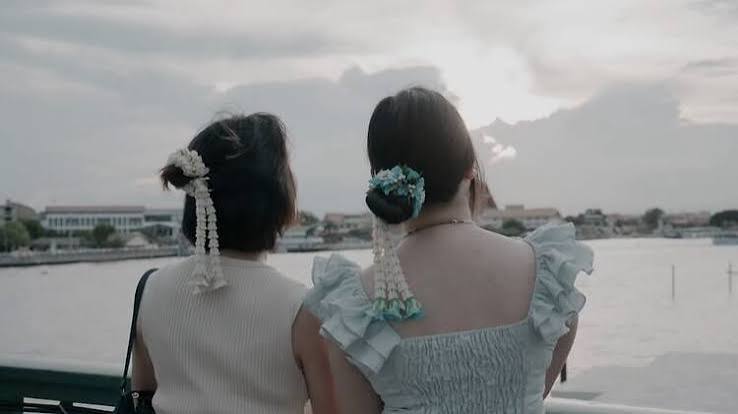
The latest trend is somewhat different. Rather than being presented as an offering or ceremonial decoration, floral garlands are increasingly being worn as hair and head accessories, particularly in photographs and short-form videos shared online.
There is no single clear explanation for exactly where the trend began. However, TikTok and Instagram have helped turn the look into a highly shareable fashion statement, particularly among younger Thais.
The idea also has historical roots.
Traditional Thai hairstyles once featured elaborate arrangements that could be decorated with flowers and ornamental pieces. Among the historical references is the Phra Kiao, a type of hair ornament associated with royal imagery and prestige.
The word kiao refers to a hair ornament, and these decorative pieces eventually developed into more elaborate accessories made from materials including gold, silver and red-gold alloys.
Although the traditional style gradually disappeared from everyday fashion, its imagery remains familiar in Thailand. The Phra Kiao continues to appear as an emblem associated with a number of prominent educational institutions.
The flower market behind the trend
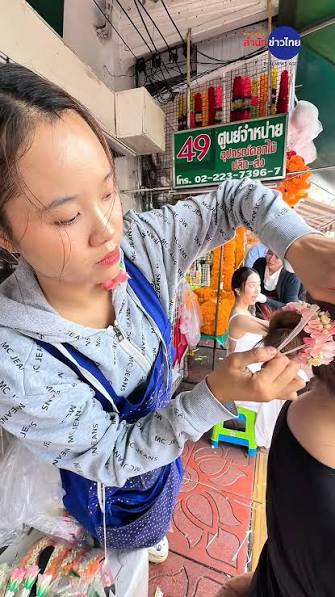
Much of the current fascination with floral styling has been connected to Pak Khlong Talat, Bangkok’s historic flower market.
Located near the Chao Phraya River, the market has undergone several transformations throughout its history. It began as a floating market during the reign of King Rama I, later became known for fish trading during the reign of King Rama V, and eventually developed into a major marketplace for fresh produce and flowers.
About seven decades ago, Pak Khlong Talat evolved into the flower market that visitors recognize today.
Its colorful stalls have also made it an increasingly popular destination for younger generations looking for distinctive backdrops for photographs and social media content.
Earlier this year, the area attracted crowds of young people who came to choose lotus blossoms and photograph them during the evening golden hour, particularly around the nearby Memorial Bridge.
When tradition becomes fashion
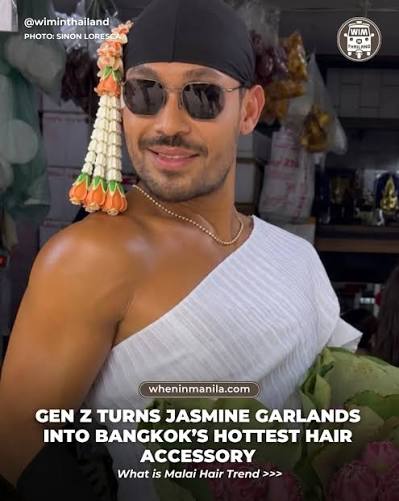
The renewed interest in floral accessories reflects a broader phenomenon in which younger Thais are rediscovering objects traditionally associated with religious or ceremonial life and presenting them in a contemporary way.
Lotus flowers offer another example. Traditionally connected with Buddhist practices and religious occasions, they have also become popular among young people as a visual and photographic element.
The same transformation is now taking place with Phuang Malai. What was once primarily seen as a ceremonial expression of respect and devotion is being reinterpreted as something beautiful, fashionable and highly photogenic.
For some Thais, the trend may be unexpected. For a younger generation discovering these traditions through social media, however, the garland is becoming a bridge between Thailand’s cultural heritage and modern digital fashion.